

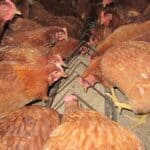
Laying hens
Nutritional components
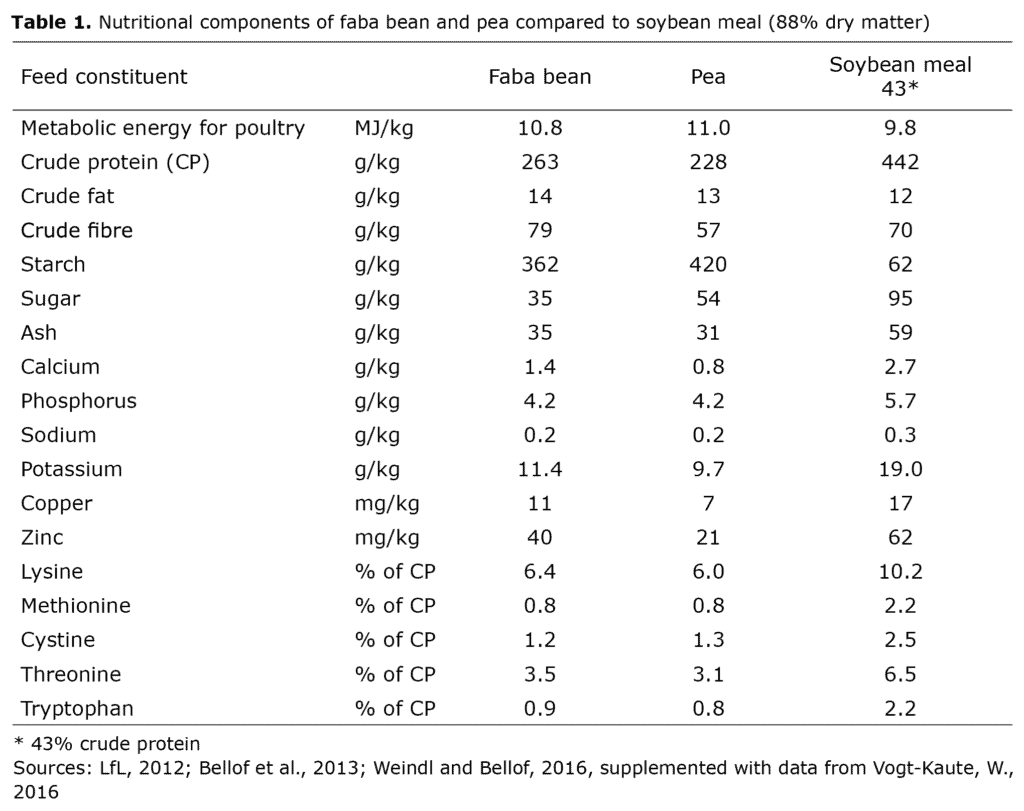
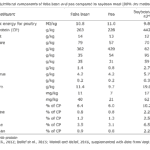
Pea is used in livestock feed primarily because of its protein content. The dry matter is about 24% protein and also contains energy-rich ingredients such as starch, oil and sugar (Table 1). The nutrient contents vary depending on growing conditions and cultivar. The quality of the protein is determined by the amino acid profile which in turn is determined largely by the cultivar (variety). Pea is rich in lysine, but relatively poor in methionine and cysteine (Table 1). The limiting factor for the use of pea in poultry rations is the low methionine content. The digestibility of the amino acids is good. The mineral content is similar to that of cereals. Pea contains less phosphorus than soy and rapeseed extraction meal. The phosphorus is partly bound to phytin, which reduces uptake. The addition of phytase reduces this problem.
Anti-nutritional factors
Pea may contain anti-nutritional components such as tannin, protease inhibitors, lectins and saponins. These can affect digestion and animal health. Harmful levels of tannins are only found in purple-flowering pea that has a dark seed hull (seed coat). The bitter taste reduces feed intake. Most commercial cultivars are white-flowering, have a light-coloured seed hull and therefore, contain little tannin. A reduced digestibility of crude protein and enzyme binding due to tannins only plays a role with high inclusion rates of purple-flowering pea. Other anti-nutritional ingredients such as protease inhibitors, lectins and saponins are only present in small amounts in pea, which do not have a negative effect at the amounts listed below.
Turkeys
Feed value
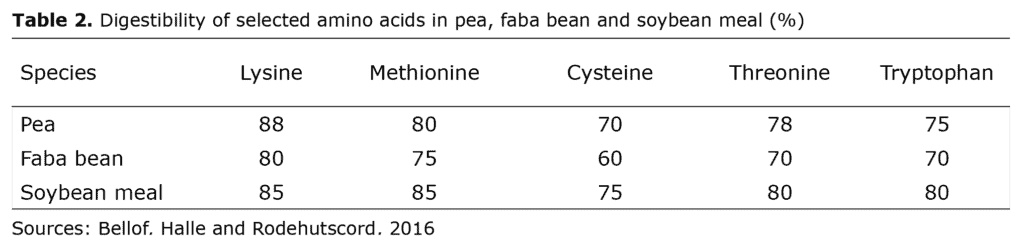
The protein feed value depends largely on the amount of protein and the nutritional quality of the protein and the energy feed value resulting from the digestibility of the nutrients. Protein quality in poultry nutrition is characterised by the contents of the essential amino acids. These are lysine, methionine and cysteine, threonine and tryptophan. The digestibility of the amino acids is also important. This varies both between amino acids and between different grain legumes (Table 2).
Maximum inclusion rates of pea in poultry feed
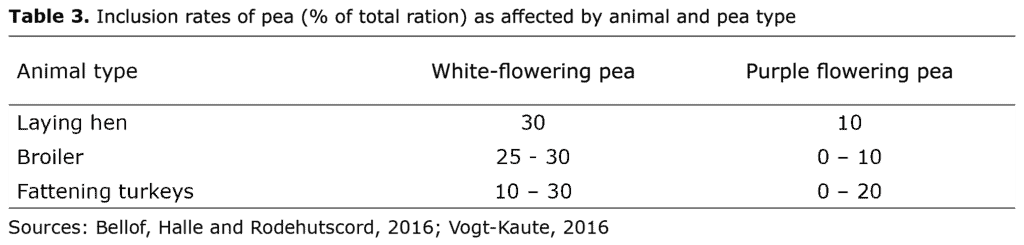
The quantities used depend on age and performance phase (Table 3).
Depending on the other components in the feed, the use of peas can reduce the proportion of anti-nutritional substances in the total ration, e.g. non-starch polysaccharides (NSP) from oil cakes.
Further Information
Bellof, G., Halle, I., Rodehutscord, M., 2016. Ackerbohnen, Futtererbsen und Blaue Süßlupinen in der Geflügelfütterung. UFOP-Praxisinformation.
Jeroch, H., Lipiec, A., Abel, H., Zentek, J., Grela, E., Bellof, G., 2016. Körnerleguminosen als Futter- und Nahrungsmittel. DLG-Verlag, Frankfurt.
Losand, B., Pries, M., Steingaß, H., and Bellof, G., 2020. Ackerbohnen, Körnerfuttererbsen, Süßlupinen und Sojabohnen in der Rinderfütterung. UFOP-Praxisinformation. www.ufop.de/medien/downloads/agrar-info/praxisinformationen/tierernaehrung
Demonstrationsnetzwerk Erbse/Bohne, website: www.demoneterbo.agrarpraxisforschung.de
Feedipedia. Animal feed resources information system, website: www.feedipedia.org



0 Comments