
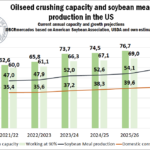
While crushing in Argentina has stagnated over the last 15 years, the growing demand for soybean oil to produce hydrotreated vegetable oil (HVO) in the United States is driving a significant expansion of its crushing capacity, resulting in a substantial increase in soybean meal production. However, this surge in supply is poised to far exceed domestic demand, triggering a 51% increase in US soybean meal exports from 2022/23 to 2026/27. It is projected that the US could export more than 19 million tons of soybean meal in the latter period.
This emerging development coincides with three consecutive years in which Brazil export volumes have surpassed domestic consumption, indicating an upward trend that is expected to intensify. Considering these factors, there is a prospective global oversupply of soybean meal, which may lead to declines in international prices of this commodity.
This situation will inevitably impact Argentine foreign trade as soybean meal represents its primary export product. Argentina possesses a distinctive industrial structure within the Up River Complex, which is the second-largest agricultural export hub globally. With contributions from the rest of South America, Argentina still maintains available productive crushing capacity that can be supplemented through imports. This potential remains irrespective of the most optimistic projections for Argentine oilseed production.
The enhancement of bovine meat, poultry meat, dairy products, and even pork meat trade holds the potential to reverse Argentina’s pork trade deficit. Argentina benefits from comparative advantages due to its fertile soils and the development of its agro-industrial sector. Moreover, Argentina possesses an abundant water supply, a critical resource for furthering livestock development. The achievement of political consensus will be pivotal for economic stability and future net positive support for agricultural producers.
In the coming years, the potential of external markets and productive capacity can compensate for potential price declines, thereby allowing livestock exports to thrive. In conclusion, we assert that this situation presents a significant opportunity to diversify Argentina’s export basket.



0 Comments