
Agro-economic prospects for expanding soybean production beyond its current northerly limit in Europe
Christine Watson, Fred Stoddard, Moritz Reckling, Kathleen Karges, Sonoko D. Bellingrath-Kimura, Mosab Halwani
08.03.2022
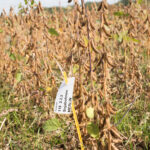
Soybean is one of the five crops that dominate global agriculture, along with maize, wheat, cotton and rice. In Europe, soybean still plays a minor role and is cultivated mainly in the South and East. Very little is known about the potential for soybean in higher latitudes with relatively cool conditions. To investigate the agronomic potential and limitations of soybean for feed (high grain yield) and food (high protein content, e.g., for tofu production) in higher latitudes, an organic soybean cropping system experiment was carried out from 2015 to 2017 in northeastern Germany. The objectives were: (1) to identify food- and feed-grade soybean cultivars that are adapted to a central European climate in terms of protein, grain yield, and yield stability, (2) to explore the effect of irrigation on soybean protein and grain yield under relatively dry growing conditions, and (3) to determine the agro-economic potential of soybean cultivation for both feed and food markets. Three soybean cultivars were tested with and without irrigation. The soybean feed-grade cultivars ‘Sultana’ and ‘Merlin’ were better adapted to the growing cycle and temperature, providing higher and more stable yields (average 2700 kg/ha) than the food-grade cultivar ‘Protibus’ (average 1300 kg/ha). Irrigation increased soybean grain yields by 41% on average. In the year with sufficient precipitation, no additional irrigation was necessary. Gross margins of organic soybean ranged between 750 €/ha for the rainfed food-grade soybean and 2000 €/ha for the irrigated feed-grade soybean and were higher than other crops. We demonstrated a large agro-economic potential for soybean as a novel grain legume crop to diversify cropping systems and increase the production of protein crops in central Europe.
Downloads
About this article
Christine Watson, Fred Stoddard, Moritz Reckling, Kathleen Karges, Sonoko D. Bellingrath-Kimura, Mosab Halwani
Legume Gap has received funding from the European Union’s Horizon 2020 research and innnovation programme under grant agreement No. 771134.
For matters related to publisher, citation and copyright, please refer to the original article.
The content is solely the responsibility of the authors. No warranties, expressed or implied, are made with respect to the information provided. Information relating to the use of plant protection products (pesticides) must be checked against the product label or other sources of product registration information.

0 Comments