
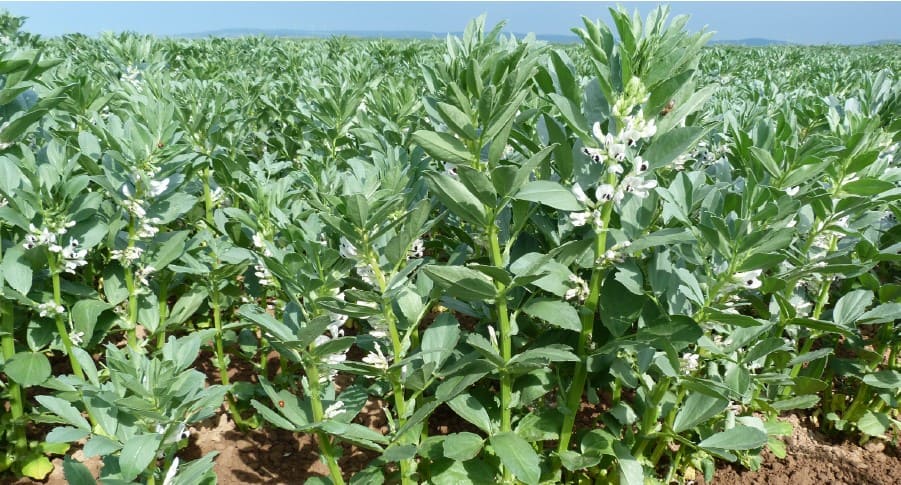
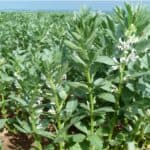
Faba bean in the field.
Nutritional components
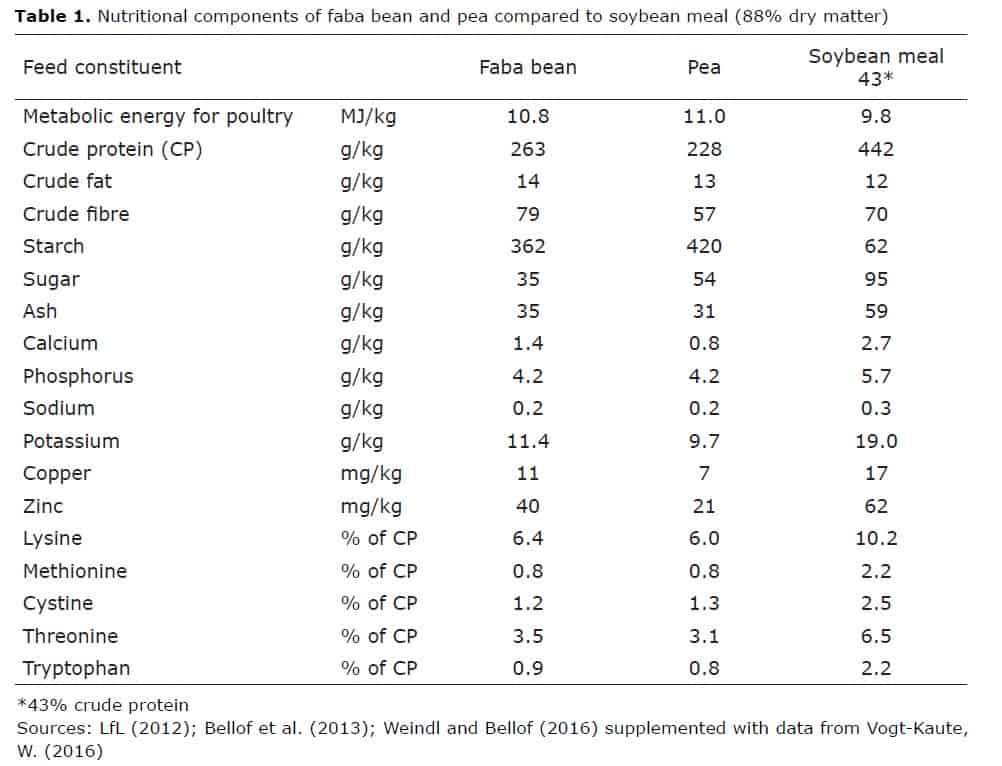
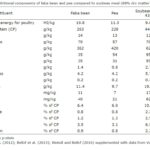
The nutritional components of faba bean are summarised in Table 1. Grain legumes are used in livestock feed primarily for their protein content. Faba bean with 12% moisture is about 26% protein. In addition to crude protein, faba bean is high in carbohydrate, especially starch, contributing to the metabolisable energy. The nutrient content of faba bean is influenced by growing condition and the cultivar used.
The protein digestibility and amino acid profile are the major determinants of the feeding value. The protein is highly digestible. On the amino acid profile side, faba bean is rich in lysine, but relatively low in methionine and cystine. The limiting factor for the use of faba bean in poultry rations is the low content of methionine.
The mineral contents are similar to that of cereals. Faba bean contains less phosphorus than soy and rapeseed meal. The phosphorus is partially bound to phytic acid which reduces phosphorus absorption without the addition of the enzyme phytase.
Anti nutritional factors
Anti-nutritional components adversely affect digestion and animal health. Vicine/convicine and tannins are the most important antinutritive substances in faba bean, followed by protease inhibitors, lectins and saponins.
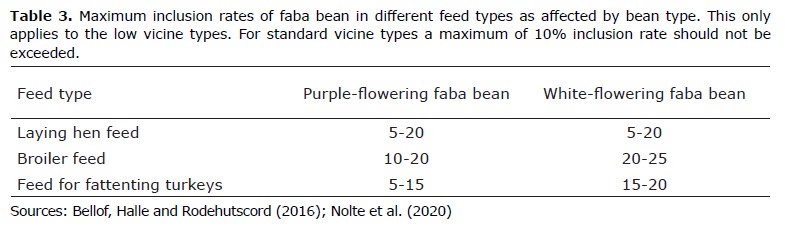
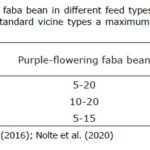
For poultry feed, only low vicine/convicine faba bean cultivars should be used. Using standard vicine/convicine containing cultivars, there is a decline in performance when inclusion rates exceed 10%.
In addition, tannins found in the seed coat of dark seeds from dark flowering cultivars reduce food intake due to their bitter taste. Cultivars containing tannins are easily recognisable by their purple flowers, but also by a black spot on the stipules and a darker grain colour. Tanninrelated effects on protein digestibility and enzyme binding play a role only at high inclusion rates (>20%).
Other anti-nutritive ingredients such as protease inhibitors, lectins and saponins are present in only small amounts in faba bean and have no adverse effects at typical rates of inclusion.
Feed value
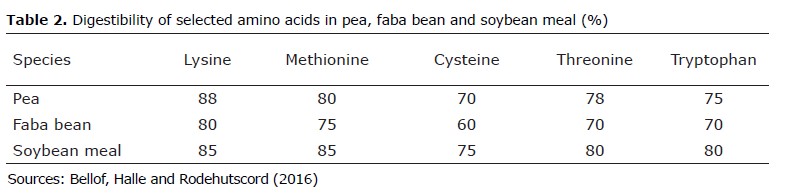
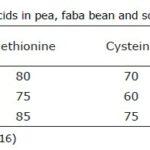
The feeding value depends on the quantity of protein, the nutritional quality of that protein, and the energy feed values determined by the digestibility of the nutrients. Protein quality in poultry nutrition is characterised by the content of the most important essential amino acids, namely lysine, methionine and cysteine, threonine and tryptophan. The digestibility of the amino acids is also important, which varies both, between amino acids and between different grain legumes (Table 2).
Maximum rate of inclusion of faba bean in poultry feed
The quantities used depend on age and performance phase of the poultry. The use of faba bean for poultry is limited by the methionine content (Figure 2). But the levels of vicine/convicine of cultivars also limit use to maximum 10% in feed ration (Table 3). Nevertheless, the methionine content of field bean is more than 20% higher than that of most cereals. This means that faba bean can be used to replace other protein-rich components, e.g., oilseed meals and corn gluten, and synthetic amino acids. A higher proportion of own or domestic raw materials can be used.
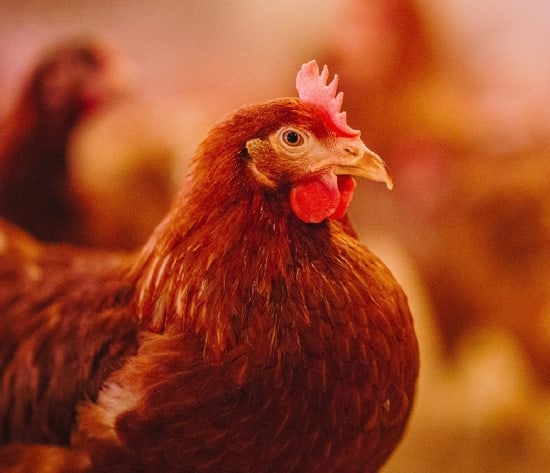
Laying hen Lohmann Brown.
Further information
Bellof, G., Halle, I. and Rodehutscord, M., 2016. Ackerbohnen, Futtererbsen und Blaue Süßlupinen in der Geflügelfütterung. UFOP Praxisinformation.
Jeroch, H., Lipiec, A., Abel, H., Zentek, J., Grela, E., Bellof, G., 2016. Körnerleguminosen als Futter und Nahrungsmittel. DLG-Verlag, Frankfurt.


0 Comments