
Intercropping legumes with rapeseed to reduce nitrogen and pesticide use in a 10-year diversified cropping system in Champagne, France
Pierre Rochepeau, Paul Tauvel
09.06.2022
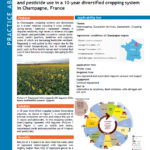
In Champagne, cropping systems are dominated by a 4-year rotation including 5 crops (wheat - spring barley - beetroot – rapeseed – wheat). It requires relatively high levels of mineral nitrogen (N) inputs and pesticides to control weeds (knotweed, lamb's quarters, bedstraw and vulpine), some of which are becoming herbicide-resistant. Rapeseed is well-suited to this region due to the mild winter temperatures, but in recent years pests such as flea beetle larvae and terminal bud weevil have become increasingly damaging to this crop. A 10-year diversified cropping system integrating legumes is considered to provide ecosystem services and reduce the use of N inputs and pesticides. In this cropping system, intercropping rapeseed with legumes such as lentils and beans, maintained yields and reduced the use of N inputs and pesticides.
Downloads
About this article
Pierre Rochepeau, Paul Tauvel
DiverIMPACTS has received funding from the European Union's Horizon 2020 research and innnovation programme under grant agreement No. 727482.
For matters related to publisher, citation and copyright, please refer to the original article.
The content is solely the responsibility of the authors. No warranties, expressed or implied, are made with respect to the information provided. Information relating to the use of plant protection products (pesticides) must be checked against the product label or other sources of product registration information.


0 Comments