
High-throughput screening of soybean di-nitrogen fixation and seed nitrogen content using spectral sensing
Johann Vollmann, Vuk Đorđević, Pablo Rischbeck, Martin Pachner, Ahmad M. Manschadi
20.01.2023
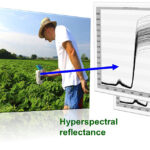
Biological nitrogen fixation mediated through symbiosis with rhizobial bacteria is a unique feature of legume crops. Under organic farming conditions, it is the main source of nitrogen in crop rotations. Therefore, nitrogen fixation of grain legumes has a substantial impact on crop performance, harvest product quality, and nitrogen balance of crop rotations. However, direct measurement of nitrogen fixation rate is laborious and technically demanding. In soybean breeding, selection for increased nitrogen fixation is desirable for improving seed protein content of genotypes and N balance of cropping systems. However, the lack of high-throughput screening methods for direct measurement of N2 fixation rates prohibits practical breeding efforts. Therefore, hyperspectral canopy reflectance measurement as a field-based phenotyping method was evaluated in three environments for indirect estimation of N fixation and uptake of soil nitrogen in a set of early maturity soybean genotypes exhibiting a wide range in seed protein content. Reflectance spectra were collected in repeated measurements during flowering and early seed filling stages. Subsequently, various spectral reflectance indices (SRIs) were calculated for characterizing nitrogen accumulation of individual genotypes. Moreover, prediction models for seed protein content as an end-of-season target trait were developed utilizing full spectral information in partial-least-square regression (PLSR) models. A number of N-related SRIs calculated from spectral reflectance data recorded at the beginning of the seed filling stage were significantly correlated to seed protein content. The best prediction of seed protein content, however, was achieved in PLSR models (validation R2=0.805 across all three environments). Environments lower in initial soil mineral N content appeared as more favorable selection sites in terms of prediction accuracy, because N fixation is not masked by soil N uptake in such environments. Hyperspectral reflectance data proved to be a valuable method for determining genetic variation in crop N accumulation, which might be implemented in high-throughput screening protocols for N fixation in plant breeding programs.
Downloads
About this article
Johann Vollmann, Vuk Đorđević, Pablo Rischbeck, Martin Pachner, Ahmad M. Manschadi
The research leading to these results has partly received funding from the European Union‘s Horizon 2020 research and innovation programme under grant agreement number 771367, ECOBREED. The support from BOKU project “Phenotyping Across Experimental Scales” (project no. IA 13460) is also acknowledged. Open access funding of the publication is provided by University of Natural Resources and Life Sciences, Vienna (BOKU).
For matters related to publisher, citation and copyright, please refer to the original article.
The content is solely the responsibility of the authors. No warranties, expressed or implied, are made with respect to the information provided. Information relating to the use of plant protection products (pesticides) must be checked against the product label or other sources of product registration information.

0 Comments