
Soybean flowering in the north: Combination of Chinese and European genetics could support better adaptation of soybean to northern latitudes
Johann Vollmann, Leopold Rittler, Volker Hahn, Xindong Yao, Vuk Đorđević, Martin Pachner, Willmar Leiser, Christine Riedel, Raluca Rezi, Claude-Alain Bétrix, Jerzy Nawracała, Inna Temchenko, Li-Juan Qiu
19.07.2024
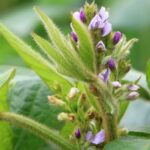
Soybean is a short-day plant. Longer days and shorter nights such as in Central and Northern Europe are delaying soybean flowering and subsequently maturity. Genes controlling the time to flowering (E-genes) are essential for adaptation to a certain latitude. They are the base of classifying soybean cultivars into maturity groups. A total of 140 Chinese and European elite soybean cultivars were genotyped for the E-genes E1 to E4 and subsequently grown in 17 European environments within the Donau Soja Haberlandt project. Results do not only show how adaptation to a certain latitude is possible, they also indicate that new combinations of E-alleles between Chinese and European soybeans could facilitate a better adaptation of soybean to northern regions of Europe and China as well. This would support breeding progress and productivity of early maturity soybeans.
Downloads
About this article
Johann Vollmann, Leopold Rittler, Volker Hahn, Xindong Yao, Vuk Đorđević, Martin Pachner, Willmar Leiser, Christine Riedel, Raluca Rezi, Claude-Alain Bétrix, Jerzy Nawracała, Inna Temchenko, Li-Juan Qiu
National Key Research and Development Program of China (2019YFE0105900). German Federal States of Baden-Württemberg (Ministry for Rural Areas and Consumer Protection Baden-Württemberg) and Bavaria (Bavarian State Ministry of Food, Agriculture and Forestry), the Swiss Confederation (Agroscope), and Saatgut Austria (Seed Association of Austria). Open access publication funding by the University of Natural Resources and Life Sciences, Vienna (BOKU University), Vienna, Austria.
For matters related to publisher, citation and copyright, please refer to the original article.
The content is solely the responsibility of the authors. No warranties, expressed or implied, are made with respect to the information provided. Information relating to the use of plant protection products (pesticides) must be checked against the product label or other sources of product registration information.
0 Comments