
Transition to legume‑supported farming in Europe through redesigning cropping systems
Inka Notz, Kairsty Topp, Johannes Schuler, Leonardo Amthauer Gallardo, Jens Dauber, Thorsten Haase, Paul Hargreaves, Michael Hennessy, Anelia Iantcheva, Jürgen Recknagel, Leopold Rittler, Marjana Vasiljević, Christine Watson, Moritz Reckling, Sheila Alves, Philippe Jeanneret, Sonja Kay
20.01.2023
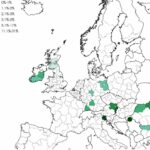
Legume-supported cropping systems affect environmental, production, and economic impacts. In Europe, legume production is still marginal with grain legumes covering less than 3% of arable land. A transition towards legume-supported systems could contribute to a higher level of protein self-sufficiency and lower environmental impacts of agriculture. Suitable approaches for designing legume-supported cropping systems are required that go beyond the production of prescriptive solutions. We applied the DEED framework with scientists and advisors in 17 study areas in nine European countries, enabling us to describe, explain, explore, and redesign cropping systems. The results of 31 rotation comparisons showed that legume integration decreased N fertilizer use and nitrous oxide emissions (N2O) in more than 90% of the comparisons with reductions ranging from 6 to 142 kg N ha−1 and from 1 to 6 kg N2O ha−1, respectively. In over 75% of the 24 arable cropping system comparisons, rotations with legumes had lower nitrate leaching and higher protein yield per hectare. The assessment of above-ground biodiversity showed no considerable difference between crop rotations with and without legumes in most comparisons. Energy yields were lower in legume-supported systems in more than 90% of all comparisons. Feasibility and adaptation needs of legume systems were discussed in joint workshops and economic criteria were highlighted as particularly important, reflecting findings from the rotation comparisons in which 63% of the arable systems with legumes had lower standard gross margins. The DEED framework enabled us to keep close contact with the engaged research-farmer networks. Here, we demonstrate that redesigning legume-supported cropping systems through a process of close stakeholder interactions provides benefits compared to traditional methods and that a large-scale application in diverse study areas is feasible and needed to support the transition to legume-supported farming in Europe.
Downloads
About this article
Inka Notz, Kairsty Topp, Johannes Schuler, Leonardo Amthauer Gallardo, Jens Dauber, Thorsten Haase, Paul Hargreaves, Michael Hennessy, Anelia Iantcheva, Jürgen Recknagel, Leopold Rittler, Marjana Vasiljević, Christine Watson, Moritz Reckling, Sheila Alves, Philippe Jeanneret, Sonja Kay
Open Access funding enabled and organized by Projekt DEAL. The work was financed by the EU H2020 project Legumes
Translated (grant 817634), the SusCrop-ERA-NET project LegumeGap (grant 031B0807B), and the PRIMA project
Biodiversify (grant 01DH20014). MR was funded by the Deutsche Forschungsgemeinschaft (DFG, German Research Foundation) — 420661662. The work was also supported by the Scottish Government RESAS Strategic Research Programme and the Scottish Funding Council University Innovation Fund.
For matters related to publisher, citation and copyright, please refer to the original article.
The content is solely the responsibility of the authors. No warranties, expressed or implied, are made with respect to the information provided. Information relating to the use of plant protection products (pesticides) must be checked against the product label or other sources of product registration information.


0 Comments